AUG ESTIMA — Surrogate ML for Autonomous Underwater Glider Hydrodynamic Design & Optimization
Surrogate machine learning model for rapid inverse hydrodynamic and parametric design estimation of autonomous underwater gliders (AUGs).
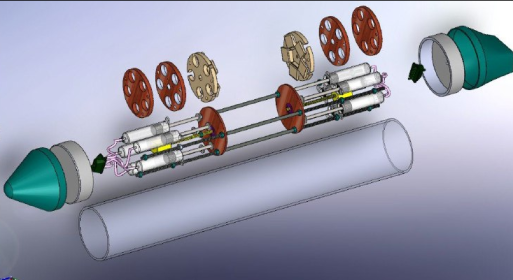
PS: This is a project based on a problem that I came across while modelling the constraints, equations and analysing CFD simulations used for designing the body of a Glider during my Summer Internship at an Underwater Robotics based company.
Introduction
Isn’t running CFD simulations every time a glider needs to optimize a certain performance aspect too hectic or just less on ROI The scope of this project is as narrow as the last unexplored frontier itself—the deep underwater domain. Despite the exponential rise of aerial and space autonomy tools, we still lack robust, modular, and data-driven tools for optimizing and designing Autonomous Underwater Vehicles (AUVs).
In particular, Autonomous Underwater Gliders (AUGs)—which operate by changing buoyancy and exploiting hydrodynamic lift—pose a unique challenge for simulation and iterative design. Current development workflows rely heavily on computationally intensive CFD (Computational Fluid Dynamics) simulations or simplified design heuristics, which are not scalable or intelligent enough for rapid prototyping.
This is where the idea behind AUG Design ESTIMA was born.
Project Motivation
While researching tools for conceptual design and performance estimation, I came across data-driven aerodynamic optimizers developed for aircraft design—particularly systems using machine learning to evaluate drag, stability, and energy efficiency directly from geometric and control parameters.
These methods are widely used in aerospace engineering to reduce reliance on expensive, iterative CFD simulations. However, comparable ML-accelerated workflows remain scarce in underwater vehicle design despite the sector’s operational constraints.
Objective
To build a machine learning pipeline that predicts hydrodynamic performance metrics and guides parameter modifications for Autonomous Underwater Gliders (AUGs) using physics-derived simulation data. This accelerates initial design space exploration without requiring computationally heavy CFD re-evaluations for every control surface or mass distribution adjustment.
“Instead of running a full CFD simulation for each iteration, learn from the parameter space and estimate optimal vehicle configurations directly.”
Technical Methodology
flowchart LR
    subgraph Input["Design Parameters"]
        A[Buoyancy Engine Frequency] --> C[AUG Physics Simulator]
        B[Wing Area & Angle of Attack] --> C
    end
    subgraph Data["Simulation & Scoring"]
        C --> D[Trajectory & Glide Ratio Metrics]
        D --> E[Multi-Objective Fitness Evaluator]
    end
    subgraph Surrogate["Surrogate Estimator"]
        E --> F[Random Forest Regressor]
        F --> G[Rapid Parameter Recommendations]
    end
1. Simulation Ground Truth
The pipeline uses the AUG Simulator developed by Bhaswanth Ayapilla to generate performance data across target design parameters:
- Buoyancy engine frequency
- Center of mass offset
- Wing area and angle of attack
- Actuator response delay
- Hydrodynamic damping coefficients
The simulator outputs key metrics including pitch stability, glide angle, energy consumption, range, and controllability.
2. Data Collection Pipeline
A batch-sampling script varies input parameters, runs the physics simulator, and logs:
- Input geometry and mass configuration parameters
- Output performance metrics (displacement, glide ratio, energy loss)
- Stability indicators (convergence rate, steady-state error)
Configurations are scored through a multi-objective evaluation function targeting:
- Maximum distance per unit energy
- Long-duration pitch and roll stability
- Trajectory linearity
3. Machine Learning Estimation Model
Regression models (evaluating Random Forest, XGBoost, and Multilayer Perceptrons) learn the inverse mapping:
Desired Performance Constraints ➝ Optimal Design Parameters
Inputs:
- Target motion profile
- Maximum allowable energy budget
- Operating depth and target range
Outputs:
- Estimated geometric and mass distribution parameters
- Predicted hydrodynamic performance with confidence intervals
This inverse design workflow enables rapid sizing and parameter screening, narrowing down candidates for final high-fidelity verification.
Future Work
- Integrate active learning to improve sample efficiency during data generation
- Implement a generative geometry loop for parametric hull and foil optimization
- Enforce physical feasibility and hydro-static constraints directly in the loss function
- Expand support to Remotely Operated Vehicles (ROVs) and hybrid glider configurations
Repository Structure
| Directory | Description |
|---|---|
sim_interface/ | Scripts to interface with the AUG Simulator across parameter sets |
data/ | Processed configurations, sensor traces, and performance data |
models/ | Trained regression models and training checkpoints |
notebooks/ | Jupyter notebooks for analysis, validation, and plotting |
docs/ | Technical notes, equation derivations, and methodology |
Source & Details
- GitHub Repository: AUG Design ESTIMA
- Stack: Python, Scikit-learn, XGBoost, NumPy, Pandas, AUG Simulator
- Tags: Underwater Robotics, Machine Learning, Computational Design, AUVs